When people think about vehicle maintenance, mileage is often the first metric considered. While mileage certainly plays a role in wear and servicing requirements, age affects a car in ways that are often overlooked. Even vehicles that are driven sparingly experience material degradation, fluid breakdown and component fatigue over time.
Modern vehicles are more advanced than ever, but they are still made from metal, rubber, plastics and electronics. These materials respond to time, temperature changes and environmental exposure regardless of how far the vehicle has travelled. Understanding how age alters maintenance needs helps drivers make smarter decisions, adjust service intervals appropriately and avoid unexpected failures that feel premature but are entirely predictable.
Why Age and Mileage Are Not the Same Thing
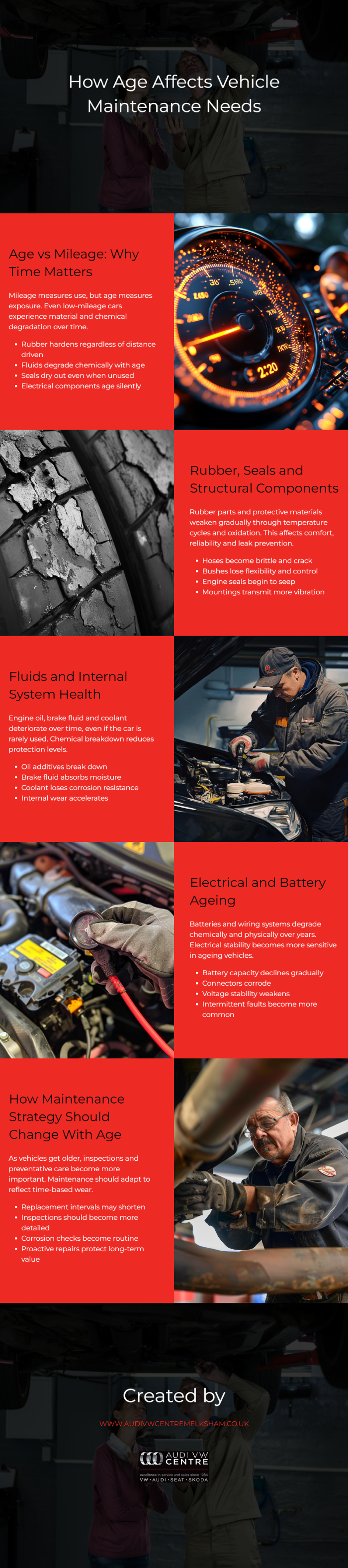
Mileage measures use, but age measures exposure. A car that sits unused still experiences temperature changes, moisture cycles and chemical degradation.
Time affects vehicles differently than distance.
- Rubber hardens regardless of mileage
- Fluids degrade chemically over time
- Seals dry out even when unused
- Electrical components age silently
Rubber Components and Natural Degradation
Modern vehicles rely heavily on rubber for seals, bushes, hoses and mounts. Rubber deteriorates through oxidation and temperature cycling, even if the vehicle is rarely driven.
Age-related rubber wear is unavoidable.
- Seals lose flexibility
- Hoses become brittle
- Bushes crack and harden
- Mountings transmit more vibration
How Age Affects Engine Seals and Gaskets
Engine seals and gaskets rely on elasticity to maintain pressure and prevent leaks. Over time, they shrink and stiffen, increasing the risk of oil and coolant leaks.
Leaks often begin with ageing materials.
- Oil seepage becomes more common
- Coolant loss develops gradually
- Minor leaks grow over time
- Engine cleanliness declines
Fluid Degradation Over Time
Fluids are not permanent. Engine oil, brake fluid and coolant degrade chemically with age, even if the car is not driven extensively.
Chemical ageing changes protection levels.
- Oil additives break down
- Brake fluid absorbs moisture
- Coolant loses corrosion resistance
- Lubrication performance declines
Brake Systems and Time-Based Wear
Brake components corrode when exposed to moisture, particularly in vehicles used infrequently. Surface rust and sticking components become more common with age.
Infrequent use accelerates corrosion.
- Discs develop corrosion patches
- Calipers seize gradually
- Brake lines deteriorate
- Hydraulic efficiency declines
Suspension Bushes and Mounting Fatigue
Suspension components are exposed to weather and road debris. As vehicles age, bushes and mountings harden and crack, affecting ride quality and alignment.
Comfort and control diminish gradually.
- Bushes lose flexibility
- Mounting points weaken
- Noises increase over time
- Alignment drifts subtly
Shock Absorbers and Damping Decline
Shock absorbers lose effectiveness slowly. Even without visible leaks, internal wear reduces damping performance over time.
Handling changes subtly with age.
- Damping response weakens
- Ride becomes less controlled
- Tyre wear increases
- Stability declines gradually
Battery Life and Calendar Age
Batteries age chemically, regardless of use. Even a low-mileage vehicle can experience battery failure simply due to time.
Age often predicts battery replacement.
- Capacity declines over years
- Cold starts become harder
- Voltage stability decreases
- Electrical faults increase
Electrical Wiring and Connector Corrosion
Electrical connectors and wiring degrade through oxidation and moisture exposure. Age increases the likelihood of intermittent faults.
Electrical ageing is progressive.
- Connectors corrode
- Insulation becomes brittle
- Resistance increases
- Faults appear unpredictably
Cooling System Components and Age
Cooling systems rely on hoses, thermostats and water pumps. Age hardens hoses and weakens seals, increasing the risk of leaks or overheating.
Cooling failures are often time-based.
- Hoses crack externally
- Internal deposits accumulate
- Thermostats become inconsistent
- Pump seals wear gradually
Exhaust Systems and Internal Corrosion
Exhaust systems corrode from the inside due to condensation. Older vehicles are more likely to experience rust-related failures even if mileage is moderate.
Corrosion begins internally.
- Moisture accumulates during cooling
- Metal thickness reduces gradually
- Mountings weaken
- Noise levels increase
Fuel System Ageing
Fuel systems can suffer from ageing seals and deposits, particularly in vehicles that are not driven regularly. Over time, rubber components degrade.
Storage affects fuel integrity.
- Fuel lines become brittle
- Seals lose flexibility
- Injectors accumulate deposits
- Starting issues increase
Steering Components and Wear
Steering systems rely on joints and linkages exposed to moisture and road salt. Age increases the risk of play and stiffness.
Precision declines gradually.
- Joints develop movement
- Assistance systems work harder
- Steering feel becomes vague
- Wear compounds with time
Timing Components and Age Sensitivity
Certain engines rely on belts or chains that age as well as wear. Even low-mileage vehicles may require timing component replacement based on time intervals.
Age-based replacement is critical.
- Rubber belts deteriorate
- Tensioners lose effectiveness
- Chain guides fatigue
- Failure risk increases
Paint, Bodywork and Structural Integrity
Age affects body panels and underbody protection. Corrosion protection systems weaken over time, particularly in climates with road salt.
Structural ageing is gradual.
- Protective coatings degrade
- Surface rust forms
- Underside corrosion spreads
- Fasteners seize
Climate and Environmental Exposure
Vehicles exposed to extreme temperatures or coastal environments age faster. Sunlight, humidity and salt accelerate material degradation.
Environment amplifies ageing.
- UV exposure fades plastics
- Salt accelerates corrosion
- Humidity affects electronics
- Heat stresses materials
How Age Changes Service Priorities
As vehicles age, preventative maintenance becomes more important. Service intervals may remain similar, but inspection depth often increases.
Older cars need closer attention.
- Rubber components are inspected carefully
- Fluids are replaced proactively
- Corrosion checks become routine
- Wear tolerance decreases
Why Low Mileage Can Mask Ageing Problems
Cars driven rarely often appear pristine, but hidden ageing can be significant. Without regular heat cycles, moisture and deposits accumulate internally.
Inactivity has consequences.
- Internal corrosion risk rises
- Seals dry out
- Batteries deteriorate faster
- Fluids stagnate
Modern Vehicles Are Not Immune to Age
Advanced materials and engineering improve longevity, but they do not eliminate ageing. Electronics and emissions systems introduce new time-sensitive vulnerabilities.
Complexity increases sensitivity.
- Sensors age unpredictably
- Software interacts with ageing hardware
- Emissions systems become delicate
- Precision tolerances shrink
Age-Related Noises and Behaviour Changes
Drivers often notice subtle changes in noise or ride quality as cars age. These changes are gradual and easy to ignore.
Small changes signal bigger issues.
- Rattles develop
- Suspension feels firmer
- Brakes sound rougher
- Steering loses sharpness
The Financial Impact of Ageing Components
Older vehicles often require more frequent small repairs rather than major failures. Managing these proactively prevents clustering of issues.
Proactive care reduces spikes in cost.
- Minor repairs prevent escalation
- Planned maintenance stabilises budgets
- Inspections catch wear early
- Unexpected breakdowns are reduced
Why Service Records Matter More as Cars Age
Aging vehicles benefit greatly from documented care. Records show how time-related wear was managed and whether preventative work was completed.
Documentation builds trust.
- History reveals maintenance consistency
- Replaced components are recorded
- Buyers value transparency
- Confidence increases
Adapting Maintenance Strategy With Age
As vehicles move beyond early ownership years, maintenance strategy should evolve. Focus shifts from warranty compliance to longevity preservation.
Strategy changes with time.
- Inspections become more detailed
- Replacement intervals shorten
- Preventative work increases
- Advice becomes usage-based
The Role of Independent Specialists in Ageing Vehicles
Independent specialists often see long-term wear patterns across many vehicles. This experience allows early identification of age-related weaknesses.
Experience prevents repetition.
- Common failure points are recognised
- Proactive replacements are advised
- Inspections are targeted
- Reliability is extended
How Audi VW Centre Supports Ageing Vehicles
Audi VW Centre assesses vehicles with age and usage in context. Maintenance advice reflects real-world exposure, not just mileage.
Context improves longevity.
- Age-related wear is anticipated
- Service plans are adjusted
- Components are inspected proactively
- Advice supports long-term ownership
Conclusion
Vehicle age affects maintenance needs in ways that mileage alone cannot predict. Rubber hardens, fluids degrade, corrosion spreads and electrical components age silently. Even vehicles driven sparingly are subject to time-based deterioration that gradually alters reliability and performance.
At Audi VW Centre, our Bromham and Melksham teams understand that ageing is inevitable but manageable. By adjusting maintenance strategies to reflect both age and usage, we help drivers preserve performance, safety and value well beyond the early years of ownership.