

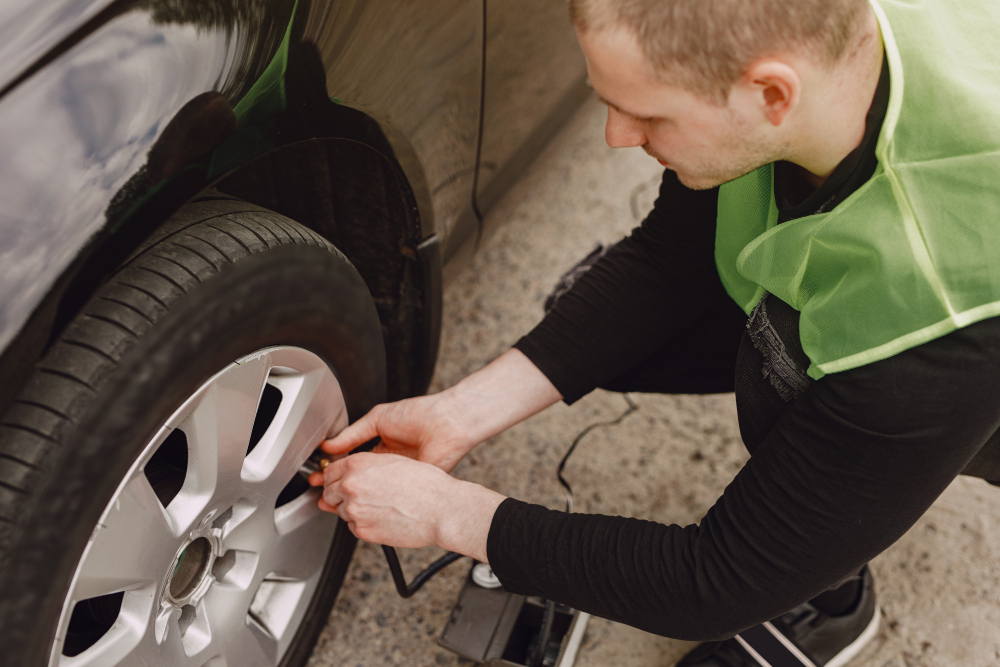
Under-inflated tyres are one of the most common and most overlooked issues affecting modern vehicles. Many drivers only check tyre pressures when prompted by a warning light or before a long journey. Yet even a small drop in pressure can quietly increase fuel consumption, accelerate wear, and reduce overall performance.
Unlike dramatic mechanical failures, under-inflation rarely causes immediate breakdown. Instead, it creates a gradual rise in running costs that often goes unnoticed. Increased fuel use, uneven tyre wear, and additional strain on suspension components all add up over time.
This guide explains how under-inflated tyres quietly increase running costs. By understanding the mechanical and financial impact of incorrect tyre pressures, drivers can take simple steps to reduce expenses, improve safety, and extend the life of their vehicle.
Why Tyre Pressure Matters More Than Many Drivers Realise
Tyre pressure directly affects how a vehicle interacts with the road. Correct inflation ensures the tyre maintains its intended shape and contact patch. When pressure drops, the tyre deforms, increasing rolling resistance.
This increased resistance forces the engine to work harder to maintain speed. Over time, even minor under-inflation leads to measurable financial impact.
Pressure determines efficiency.
- Correct pressure maintains optimal contact patch
- Under-inflation increases rolling resistance
- Engine workload rises to compensate
- Fuel consumption gradually increases
Increased Fuel Consumption From Higher Rolling Resistance
Under-inflated tyres create greater friction with the road surface. This additional drag reduces fuel efficiency because more energy is required to move the vehicle.
Drivers may not notice a sudden change, but fuel usage rises steadily. Over months of driving, the extra fuel cost can be significant.
Resistance directly affects economy.
- Increased drag reduces miles per gallon
- Engine burns more fuel to maintain speed
- Urban driving amplifies the impact
- Long-term fuel costs rise steadily
Uneven and Accelerated Tyre Wear
When tyres are under-inflated, the outer edges bear more weight than intended. This leads to uneven wear patterns, particularly on the shoulders of the tyre.
Premature wear reduces tyre lifespan, meaning replacement is required sooner than expected. This is one of the most direct financial consequences of neglecting tyre pressure.
Wear shortens value.
- Outer edges wear faster under low pressure
- Tyre lifespan reduces significantly
- Replacement frequency increases
- Overall tyre investment diminishes
The Cost of More Frequent Tyre Replacement
Replacing tyres earlier than necessary directly increases running costs. Quality tyres represent a substantial investment, particularly for larger vehicles.
Consistently maintaining correct pressure extends tyre life and protects that investment. Neglecting it leads to avoidable expenditure.
Longevity saves money.
- Premature wear increases replacement frequency
- Quality tyres become poor value when neglected
- Correct inflation maximises lifespan
- Fewer replacements reduce overall cost
Increased Risk of Tyre Damage
Under-inflated tyres flex more than they should. This excessive flexing generates heat within the tyre structure, weakening internal components.
Over time, this can lead to sidewall damage or even sudden failure. Repairs or emergency replacements add unplanned costs.
Heat undermines durability.
- Excessive flex builds internal heat
- Structural weakening increases failure risk
- Sidewall damage becomes more likely
- Unexpected breakdown costs may arise
Reduced Fuel Efficiency in Stop-Start Driving
Urban driving conditions already demand frequent acceleration and braking. Under-inflated tyres worsen efficiency in these scenarios by increasing resistance at every movement.
Drivers in city environments often experience the greatest financial impact from incorrect pressures.
Short journeys amplify the effect.
- Stop-start driving increases fuel waste
- Rolling resistance affects acceleration
- Urban commuters see higher impact
- Efficiency losses accumulate daily
Increased Strain on Suspension Components
Tyres act as part of the suspension system. When under-inflated, they absorb shocks differently, placing added stress on suspension components.
Over time, this strain can accelerate wear on shock absorbers, bushings, and alignment systems, increasing maintenance costs.
Tyres influence overall vehicle health.
- Poor pressure alters suspension performance
- Extra stress accelerates component wear
- Alignment issues may develop
- Repair bills increase unnecessarily
Impact on Steering and Handling
Under-inflated tyres reduce steering precision and responsiveness. The vehicle may feel heavier to steer or less stable at speed.
Drivers may compensate by making more corrections, increasing tyre wear and fuel consumption further.
Handling affects efficiency.
- Steering becomes less responsive
- Increased effort affects driving smoothness
- Instability may lead to overcorrection
- Poor handling increases tyre wear
The Financial Impact of Lower Resale Value
Tyres in poor condition can affect resale or trade-in value. Visible uneven wear signals neglect and may raise concerns about overall vehicle maintenance.
Maintaining correct tyre pressure supports a stronger resale position and protects long-term value.
Condition influences perception.
- Uneven wear reduces buyer confidence
- Poor tyre condition lowers trade-in offers
- Well-maintained tyres enhance presentation
- Attention to detail supports resale value
How Weather Conditions Exacerbate Under-Inflation
Cold weather reduces tyre pressure naturally, often by around one PSI for every significant drop in temperature. Drivers may unknowingly run under-inflated tyres throughout winter.
This seasonal pressure drop increases fuel costs and wear if not corrected.
Temperature changes affect performance.
- Cold weather lowers tyre pressure
- Winter driving increases rolling resistance
- Seasonal checks prevent unnecessary cost
- Temperature awareness supports efficiency
Small Pressure Losses Have Big Long-Term Effects
A tyre does not need to be visibly flat to increase costs. Even a small drop of a few PSI can reduce fuel efficiency and increase wear.
Because the change is gradual, drivers often fail to notice the difference until significant wear has occurred.
Minor neglect leads to major expense.
- Slight under-inflation reduces economy
- Gradual changes are easily overlooked
- Long-term costs accumulate quietly
- Regular checks prevent financial loss
Tyre Pressure Monitoring Systems Are Not Foolproof
Many modern vehicles include tyre pressure monitoring systems. However, these systems typically activate only when pressure drops significantly.
Drivers should not rely solely on warning lights. Manual checks remain essential.
Technology supports but does not replace checks.
- Warning systems trigger late
- Manual checks detect early changes
- Sensors may not monitor gradual losses
- Proactive checks prevent hidden costs
The Link Between Safety and Financial Impact
Reduced grip from under-inflated tyres increases stopping distances. Accidents or near-misses carry obvious financial implications beyond routine running costs.
Safety and cost efficiency are closely connected when it comes to tyre maintenance.
Safety failures are expensive.
- Longer stopping distances increase risk
- Reduced grip affects wet-weather control
- Accidents carry insurance and repair costs
- Proper pressure protects both safety and finances
Increased Engine Load and Wear
When tyres resist movement, the engine compensates by working harder. Over time, increased load contributes to greater fuel use and potential mechanical strain.
While the effect may be gradual, inefficiency compounds over thousands of miles.
Efficiency protects engine health.
- Increased resistance raises engine workload
- Higher fuel burn increases cost
- Long-term inefficiency accelerates wear
- Correct pressure supports smoother operation
How Regular Pressure Checks Save Money
Checking tyre pressure takes only minutes but can save significant amounts over the life of a vehicle. Monthly checks are often sufficient for most drivers.
Routine monitoring prevents gradual efficiency loss and extends component lifespan.
Simple habits create savings.
- Monthly checks maintain optimal pressure
- Adjusting for load improves performance
- Early detection prevents uneven wear
- Consistency protects long-term value
The Cost Comparison: Prevention vs Neglect
The financial cost of maintaining correct tyre pressure is negligible. Air is free at most service stations, and digital gauges are inexpensive.
In contrast, increased fuel use and premature tyre replacement represent avoidable expense.
Prevention is financially logical.
- Air is inexpensive or free
- Tyres are costly to replace
- Fuel inefficiency adds up quickly
- Regular checks deliver measurable savings
Fleet and High-Mileage Drivers See Greater Impact
Drivers who cover high annual mileage experience greater cost differences from under-inflated tyres. Commercial fleets often track tyre pressure closely to control operating expenses.
The more miles driven, the more significant the financial effect.
Distance multiplies cost.
- High mileage amplifies inefficiency
- Fleet operators prioritise pressure management
- Commercial drivers benefit from monitoring
- Long-term savings scale with usage
Environmental Costs and Financial Efficiency
Higher fuel consumption increases emissions. While the financial impact is direct, environmental costs are also significant.
Efficient tyre pressure reduces both running costs and environmental footprint.
Efficiency benefits both wallet and environment.
- Lower fuel use reduces emissions
- Proper pressure improves sustainability
- Environmental responsibility aligns with cost savings
- Efficient driving begins with tyre care
Building a Routine for Long-Term Savings
Creating a simple tyre-check routine helps avoid hidden running costs. Including tyre checks alongside fuel stops or monthly vehicle inspections ensures consistency.
Small habits protect both safety and finances over time.
Routine prevents regret.
- Combine checks with fuel stops
- Monitor pressure changes seasonally
- Inspect tread alongside pressure
- Maintain records for consistency
Conclusion
Under-inflated tyres rarely cause immediate breakdown, but they steadily increase running costs through higher fuel consumption, accelerated wear, and added strain on vehicle components. Because the impact is gradual, many drivers underestimate the financial consequences.
By checking and maintaining correct tyre pressures regularly, drivers can reduce fuel expenses, extend tyre lifespan, improve safety, and protect overall vehicle value. A simple monthly check is one of the most cost-effective maintenance habits any driver can adopt.


